The TSH Trap: How a Single Lab Number Is Leaving Millions of Americans Exhausted and Undiagnosed
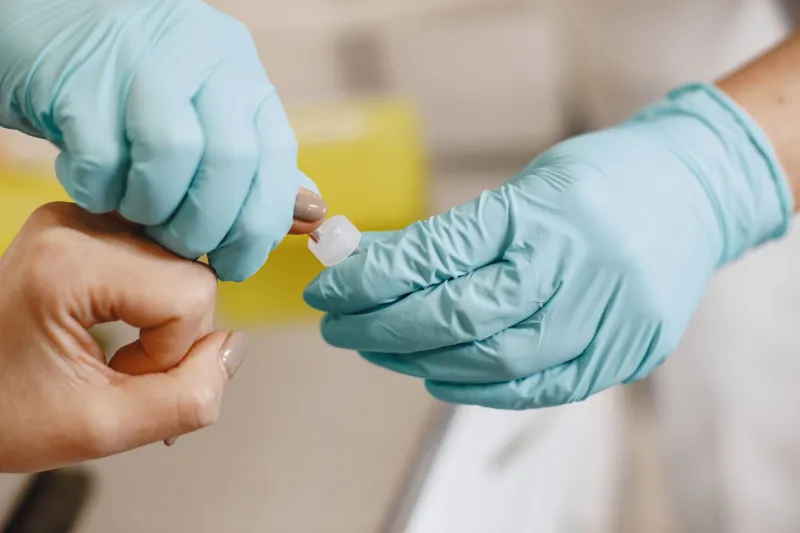
You went to your doctor. You complained about being tired all the time, gaining weight even though nothing in your diet changed, feeling mentally sluggish, cold when everyone else is comfortable. Your doctor nodded, ordered some bloodwork, and called a few days later to say everything looks fine.
But did it, though?
For the vast majority of Americans, a "thyroid test" means one thing: TSH, or thyroid-stimulating hormone. It's the default. It's what most insurance companies reimburse without question. And it is, by itself, a wildly incomplete snapshot of how your thyroid is actually functioning.
Let's break down why that matters — and what you should actually be asking for.
What TSH Actually Measures (And What It Doesn't)
TSH is produced by your pituitary gland, not your thyroid. Think of it as the thermostat signal — your brain telling your thyroid to produce more hormone. When TSH is high, your brain is screaming at your thyroid to wake up. When it's low, things are presumably humming along.
The problem? TSH only tells you about the request, not the delivery.
Your thyroid primarily produces T4, a relatively inactive hormone that has to be converted into T3 — the biologically active form that your cells actually use for energy, metabolism, temperature regulation, and cognitive function. TSH gives you zero information about whether that conversion is happening properly. Zero.
So you could have a perfectly "normal" TSH while your body is failing to convert T4 into usable T3, leaving you running on fumes. Your pituitary is happy. Your cells are starving. Your doctor calls it normal.
The Markers That Actually Tell the Story
Functional medicine practitioners and integrative doctors have been pushing back on the TSH-only approach for years. Here's the panel they typically consider the bare minimum for a real thyroid assessment:
Free T4 (FT4): This measures the unbound, available form of T4 in your blood. "Free" means it's not attached to a carrier protein — it's the portion that can actually do something.
Free T3 (FT3): This is the active hormone your cells use. Low Free T3 is directly associated with hypothyroid symptoms, even when TSH looks completely normal. If your doctor hasn't ordered this, they've handed you an incomplete report and called it comprehensive.
Reverse T3 (RT3): Here's where it gets interesting. Under chronic stress, illness, or inflammation, your body can convert T4 into reverse T3 — a mirror-image molecule that blocks T3 receptors without activating them. High RT3 is like a key that fits the lock but won't turn it. Your TSH can look fine, your T4 can look fine, and you can still feel terrible because your cells are being blocked.
Thyroid Peroxidase Antibodies (TPOAb) and Thyroglobulin Antibodies (TgAb): These are the markers for Hashimoto's thyroiditis, an autoimmune condition that's estimated to be the number one cause of hypothyroidism in the United States. Hashimoto's can smolder for years — even decades — before TSH levels shift enough to trigger a diagnosis. Testing antibodies can catch it early, when intervention is actually meaningful.
The "Normal Range" Problem
Even when these additional markers are tested, there's another wrinkle: the reference ranges used by most commercial labs are population-based averages, not optimal health targets.
The standard TSH range runs roughly from 0.5 to 4.5 mIU/L depending on the lab. Many functional medicine practitioners argue that optimal TSH for someone who feels well tends to sit between 1.0 and 2.5 mIU/L. A TSH of 4.2 is technically "normal" by lab standards — but for plenty of people, it feels like running a car on fumes.
Similarly, Free T3 can be technically within range but sitting at the very bottom of that range, which is a very different physiological situation than being in the upper third.
This isn't fringe science. The American Thyroid Association has acknowledged ongoing debate about where TSH reference ranges should actually be set. The conversation is happening — it's just not trickling down to the average primary care visit.
What's Blocking the Full Picture?
So why doesn't every doctor run a complete panel? A few reasons, and none of them are great.
First, there's the insurance reimbursement issue. TSH is cheap and widely covered. Ordering a full thyroid panel including antibodies, Free T3, and Reverse T3 can run into pushback from insurers, especially without a prior diagnosis.
Second, there's the training gap. Most conventional medical training focuses on diagnosing and treating overt thyroid disease — not on catching subclinical dysfunction or optimizing thyroid function in someone who doesn't yet meet diagnostic criteria.
Third, and maybe most frustrating, is the symptom-dismissal problem. Fatigue, brain fog, weight resistance — these are easy to chalk up to stress, aging, or lifestyle. They're vague. They're common. They don't scream "run a comprehensive thyroid workup" in a 15-minute appointment.
What You Can Actually Do About It
If you've been told your thyroid is fine but you still feel off, here's a practical starting point:
Request the full panel by name. When you call to schedule bloodwork or talk to your doctor, specifically ask for TSH, Free T4, Free T3, Reverse T3, TPO antibodies, and Thyroglobulin antibodies. Some doctors will order it without issue. Others will push back — and that's useful information in itself.
Consider a functional medicine or integrative practitioner. These providers are generally more comfortable ordering and interpreting a comprehensive thyroid panel and looking at optimal ranges rather than just pathological ones.
Use direct-to-consumer lab testing. Services like Ulta Lab Tests, Walk-In Lab, or Everly Well allow you to order your own thyroid panels without a physician's order in most states. It's not a substitute for working with a knowledgeable provider, but it gives you data to bring to the conversation.
Track your symptoms systematically. Temperature dysregulation, hair loss, constipation, dry skin, slow reflexes — these are clinical signs that support the case for a deeper look. Document them. Bring them to your appointment.
The thyroid is a small gland doing enormous work. It deserves more than a single number on a lab report. If your doctor is satisfied with TSH alone, it's completely reasonable — and honestly, necessary — to ask for more. You're not being difficult. You're being thorough. And in this case, thorough might be the difference between getting answers and spending another year wondering why you feel like you're running on empty.