Not Every Blood Sugar Spike Is a Crisis — But Your CGM Might Be Convincing You Otherwise
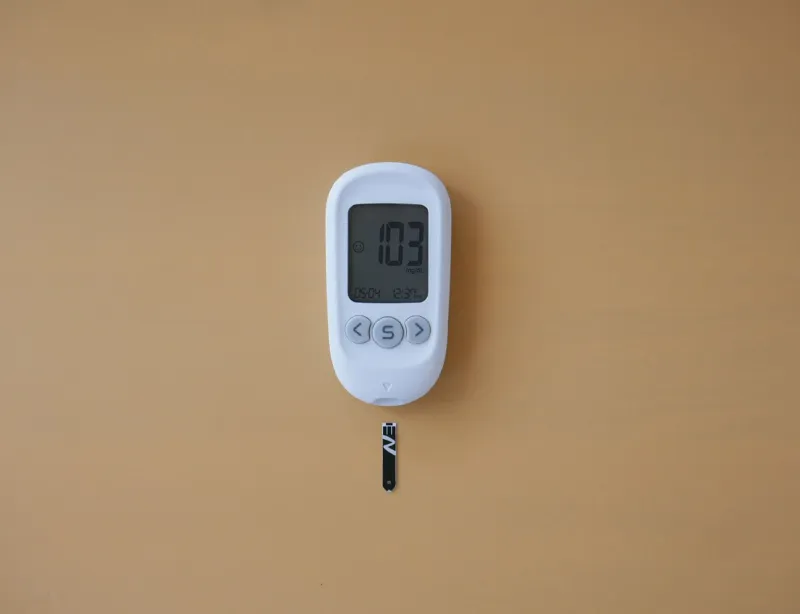
Somewhere between the wellness influencer strapping on a CGM to optimize their morning oatmeal and the overworked primary care doc circling your fasting glucose in red ink, something important got lost. Context. Nuance. The actual story your blood sugar is trying to tell.
Continuous glucose monitors — those little wearable patches that track your blood sugar in real time — have exploded in popularity. They were originally designed for people managing Type 1 diabetes. Now they're showing up on the wrists of biohackers, fitness enthusiasts, and anyone who's ever Googled "am I pre-diabetic." And while the technology itself is genuinely impressive, the way most people are interpreting the data? That's where things start to unravel.
The Spike That Scared You Might Have Been Doing Its Job
Here's something your doctor probably didn't explain: your blood sugar is supposed to rise after you eat. That's not a malfunction. That's physiology. The question isn't whether glucose goes up — it's how high, how fast, and how quickly your body brings it back down.
But there's another layer that almost never gets discussed in a standard office visit. Glucose can spike for reasons that have absolutely nothing to do with what you ate. Intense exercise, a poor night's sleep, a stressful work meeting, even a cold shower — all of these can temporarily push your blood sugar up. Your stress hormones, particularly cortisol and adrenaline, trigger your liver to dump stored glucose into your bloodstream. It's an ancient survival mechanism. Your body thought you might need to run from something.
When someone wearing a CGM sees their glucose jump to 160 after a hard workout or a bad night of sleep, and then immediately assumes they're on the road to diabetes, they've missed the whole point of what that number represents. A stress response isn't the same thing as metabolic dysfunction. Treating them the same way is a significant mistake.
What a Single Fasting Glucose Number Can't Tell You
The standard approach in most American doctors' offices is to pull a fasting glucose number — ideally taken after eight hours without food — and use it as a primary indicator of metabolic health. If it's under 100 mg/dL, you're fine. Between 100 and 125, you're pre-diabetic. Above 125, you've crossed a line.
Those cutoffs didn't come down from the mountain on stone tablets. They were established based on population data and clinical consensus, which means they're useful at scale but genuinely limited when applied to an individual. Some researchers have pointed out that a fasting glucose in the high 80s or low 90s, combined with other markers, can already suggest early insulin resistance — years before the official "pre-diabetic" threshold is crossed. Meanwhile, someone with a fasting glucose of 105 who has excellent insulin sensitivity, low inflammation, and a healthy metabolic rate might be in far better shape than their lab result implies.
The single-number approach also ignores what happens after you eat. Post-meal glucose response, how long it takes to return to baseline, and what your glucose looks like over a 24-hour period — these tell a richer story. Fasting glucose alone is like judging the health of a river by checking the water level once at noon on a Tuesday.
The Metrics That Actually Matter More
If you really want to understand your metabolic health, a few other markers deserve a seat at the table.
Fasting insulin is arguably more revealing than fasting glucose, especially in the early stages of insulin resistance. Your glucose can look perfectly normal for years while your insulin is quietly working overtime to keep it there. By the time glucose starts creeping up, the problem has often been building for a decade.
HOMA-IR — a calculation that uses both fasting glucose and fasting insulin — gives you a sense of how hard your body is working to maintain blood sugar balance. It's not a standard part of most routine bloodwork, which is a genuine gap in conventional metabolic screening.
Hemoglobin A1c captures your average blood sugar over roughly three months, which smooths out the daily noise. It's more useful than a single fasting measurement, though it has its own limitations — it can be skewed by certain blood conditions and doesn't capture patterns of variability.
Triglyceride-to-HDL ratio is an underused proxy for insulin resistance that many integrative practitioners rely on. A ratio above 3 is often considered a red flag, even when standard glucose markers look clean.
None of these are magic bullets on their own. But together, they paint a picture that a single glucose number simply cannot.
The CGM Data Anxiety Loop
There's a psychological dimension to this that doesn't get nearly enough attention. Giving someone a device that shows their blood sugar fluctuating in real time, without adequate context or education, is a recipe for health anxiety. And health anxiety, ironically, raises cortisol. Which raises blood sugar. Which causes more anxiety about the number on the screen.
Several functional medicine practitioners have started pulling their patients off CGMs after noticing that the constant monitoring was creating stress responses that were actively worsening the very numbers they were trying to improve. The data becomes a feedback loop that the nervous system can't escape.
This isn't an argument against CGMs. For people with diabetes or serious insulin resistance, real-time glucose data is legitimately valuable. But for someone who is metabolically healthy and wearing one out of curiosity or optimization, the psychological cost may outweigh the insight — especially if they don't have a practitioner helping them interpret what they're seeing.
Questioning the Framework, Not Just the Number
The deeper issue here isn't really about glucose at all. It's about what happens when medicine reduces something complex to a single data point and then builds a whole decision tree off that one number.
Your metabolism doesn't operate in isolation. It's tangled up with your sleep quality, your stress load, your hormonal environment, your gut microbiome, your movement patterns, and your history. A blood sugar reading at 7 a.m. on a Tuesday is a snapshot of one moment in an incredibly dynamic system. Treating it like a verdict is how people end up on medications they may not need, or spiraling into dietary restriction that creates its own cascade of problems.
The renegade move here isn't to ignore your glucose numbers. It's to refuse to let a single metric tell the whole story. Ask for the fuller picture. Get your fasting insulin tested. Look at your triglycerides. Pay attention to how you actually feel — your energy, your hunger patterns, your sleep, your mood. Those signals have been part of the metabolic conversation a lot longer than any wearable patch.
Your body is running an incredibly sophisticated operation. It deserves a more sophisticated read than one number on a lab report.